Preventing data bleed during the Local Water Done Well transition is a massive first step. But once legacy records are secured, a second challenge often surfaces: the visibility gap caused by “dirty data.”
It is one thing to save your data. It is another to actually be able to use it.
Many councils are moving into the new Water Services Organisation (WSO) model with a massive backlog of dirty data: unstructured PDFs, fragmented spreadsheets, and historical maintenance logs that cannot be easily searched or analysed. In a high-stakes transition, having data you cannot query or search effectively is almost as risky as having no data at all.
This is where ReticManager acts as the “refinery” for legacy records.
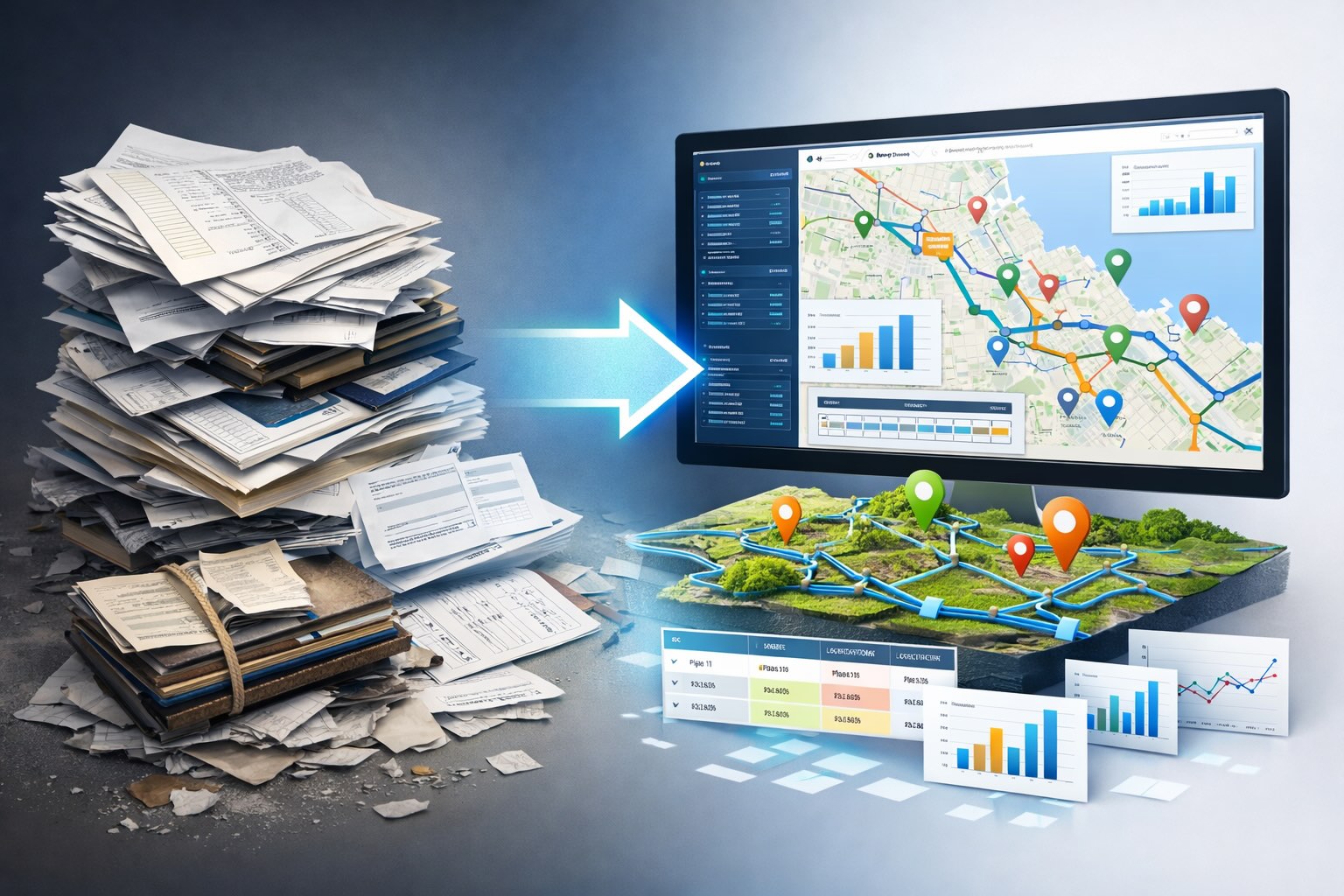
We do not just host files. We clean them. Unstructured, “dirty” legacy data is transformed into structured, actionable intelligence. That means a new WSO can start with a clear Day 1 view of asset condition, rather than a mountain of digital paperwork.
How ReticManager turns “dirty data” into intelligence
From paper to power
Unstructured legacy PDFs and scattered logs are converted into structured digital insights that can actually be reported on and mapped.
Closing the visibility gap
Teams should spend their time making high-stakes decisions, not digging through folders to find a pipe’s repair history.
Evidence-based strategy
Refined data can be used to justify CAPEX and OPEX requirements to regulators and stakeholders with confidence from the outset.
ReticManager has successfully managed this raw-to-refined transformation for Tauranga City, Whangarei District Council, and Gladstone Regional Council, turning legacy information into a strategic asset for their future entities.
The result is more than preserved data. It is usable intelligence that supports stronger planning, better visibility, and clearer decision-making from day 1.
Are you ready to see how dirty data can be transformed into clear decision-making tools for Day 1?
Book a time with us to explore your data transformation.